
A tie is nothing more than just a decorative piece of silk that men wear around their necks. But knowing how to knot the tie properly turns the haphazardly included fabric into a cornerstone of menswear. After all, the tie is the single most “appropriate” accessory to formalise one’s base attire. Hence, it makes sense to master how to knot one’s tie.

Image by Jonathan Woo, courtesy of Solarex Imaging
How Many Types Of Tie Knots Are There Anyway?
Honestly, I’m not sure exactly how many ways there are to tie one’s tie. Especially in the recent decades, with the advent of several novelty knots. Why novelty?… Well, because it’s not a “proper” way to tie one’s tie… Unless you’re intentionally under the limelight, and want your attire to call attention to yourself… When I said “proper”, I mean suitable for serious or business events. Even excluding novelty knots, there are probably a dozen or so classical ways to tie one’s tie. But do we need to master them all?… Not really… You only ever need to know the bare minimum of four traditional knots.
(1) Windsor Knot
Windsor Knot (also known as Full-Windsor) is one of the most formal ways to tie one’s tie. The Windsor is a luxuriously voluminous knot, with a characteristically symmetrical triangle. It draws attention to your tie, and then up to your face. It’s the perfect knot to display a well-balanced personal presentation. But beware if your tie has thick interlining. The added volume to the tie body will bloat the resulting knot to beyond looking neat and well proportioned.
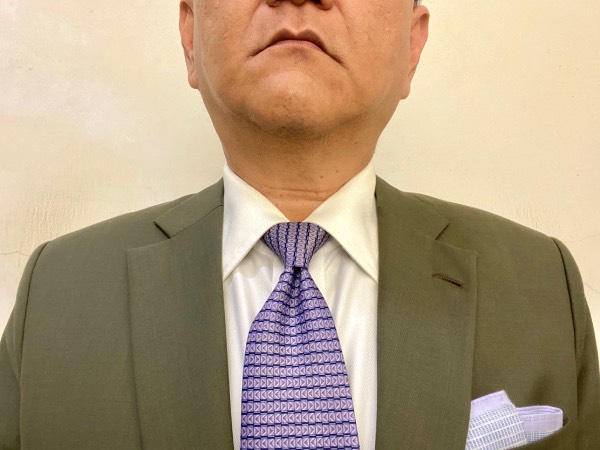
Image by Author
The Windsor is not the easiest knot to tie. It is, however, the most luxurious presentation of an otherwise simple piece of novelty silk. It’s the most appropriate knot to accompany your business formal, business semi-formal, and even business informal outfit.
(2) Half-Windsor Knot
Think of the Half-Windsor as the younger brother of the Windsor. It also forms a somewhat symmetrical triangle knot, but less voluminous than the former. Best to use when you want a symmetrical triangle knot, but your tie is a little too thick. Thick… not wide… Although the width of the tie will also somewhat contribute to the final shape of the knot too.
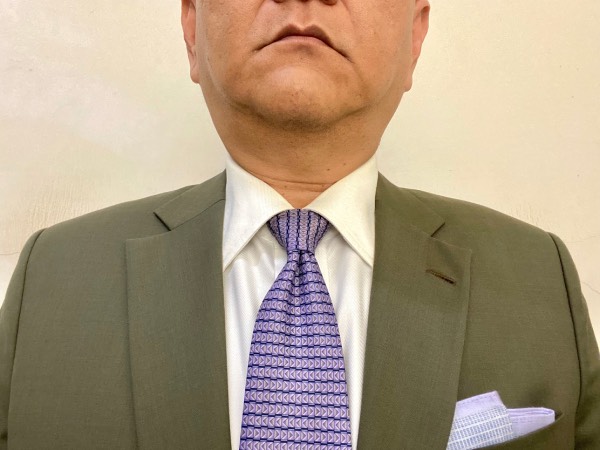
Image by Author
When you want a symmetrical knot, but the tie you chose is a little too thick, go for the Half-Windsor. It displays all the positive traits of the Windsor, but without the associated bulk. Just like its older sibling, the Half-Windsor is suitable for business formal, business semi-formal, and even business informal.
(3) Four-In-Hand Knot
Also known as the schoolboy knot, this is the simplest way to tie a tie. It’s almost always the first knot young boys learn when wearing their school ties, hence the “schoolboy” moniker. However, do understand that the Four-In-Hand also characteristically forms an asymmetrical knot. It’s a feature, not a bug. Although some people actually prefers an asymmetrical knot. Maybe it’s a subtle nod to the spirit of sprezzatura?
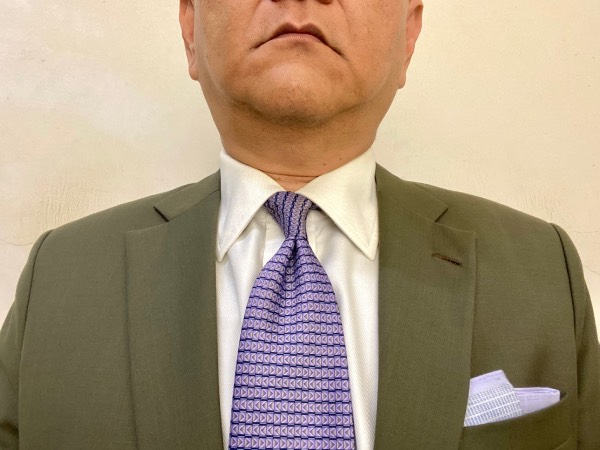
Image by Author
Generally paired with Business Informal or Business Casual. But then again, there are no rules against pairing them with the higher end of the formality spectrum either. I personally prefer Windsor or Half-Windsor for business formal, but that’s my personal choice. Four-In-Hand pairs great with narrow spread collars. So if you only ever wear narrow spread collars, Four-In-Hand is your staple choice.
(3a) Knotting The Knit Tie
The knit tie is a staple casual tie. And due to its knitted construction, knit ties are always thicker than the regular woven ties. Hence, you generally only use the Four-In-Hand for knit ties.
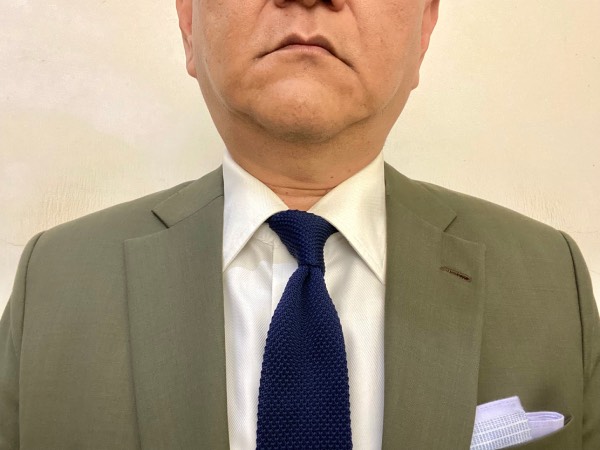
Image by Author
You can technically tie the knit tie with a Windsor or the Half-Windsor. But you’ll only end up with a disproportionately large knot. Hence, just stick to Four-In-Hand for all your knit ties.
(4) Bow Tie (Only One Knot)
Believe it or not, the bow tie is equally as dressy as the regular long tie. Hence, it makes sense to learn how to properly tie a bow tie too. This should be easy, since there’s literally only one proper way to tie a bow tie.
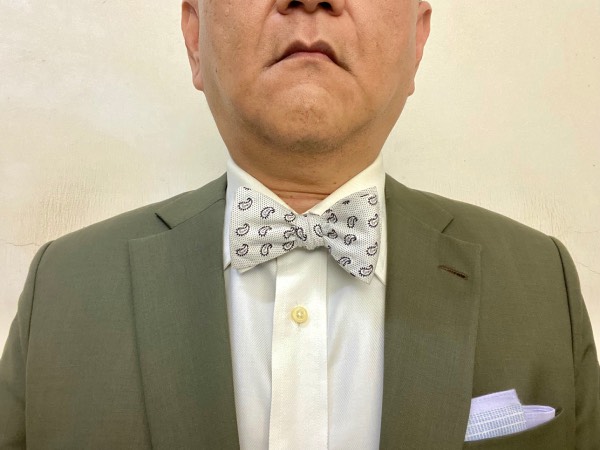
Image by Author
And no, a pre-tied, or (gasp!) a clip-on bow tie, is not acceptable. Not unless you’re ten-years-old or younger, and wearing a bow tie for the first time to your annual school concert. You may not believe me, but a bow tie is actually easier to tie than any of the others above. If you know how to tie your shoelaces, then you have no excuse for not tying your own bow tie. They’re essentially the same knot.
Knowing Other Types Of Classical Tie Knots Is A Bonus
Occasionally you’ll hear of the Prince Albert Knot (aka Double Four-In-Hand), Pratt Knot (aka Shelby ), Simple Knot (aka Oriental ), etc. Unlike the novelty knots, these are still business appropriate knots. But let’s be honest, do we really need to learn more than the absolute minimum types of knots?… The four knots mentioned above are more than sufficient to cover the entire formality spectrum, tie types, and collar types.
Disclaimer – This Is Not A Sponsored Article
All the ties pictured in the images above are from my personal collection. Well, except for the one on the mannequin, right on top. That one belongs to Sayap Bespoke Tailor. Anyway, nobody sponsored the ties used in this article. Hence, if you find this article useful, and would like to contribute something to my effort, I’d appreciate a coffee. You can buy me a coffee with the link below. Leave your thoughts, comments and critiques below.


The blazers give a royal touch to any look.
That’s a suit jacket in the photos, not a blazer… But thank you all the same for your comment. 😊